Isfahan University Of Medical Sciences And Health Treatment Services Iran
Isfahan University of Medical Sciences also known as Medical University of Isfahan (MUI) (Persian: دانشگاه علوم پزشکی و خدمات بهداشتی درمانی اصفهان, Danushgah-e 'lum-e Pezeshki-ye vâ Xedâmat-e Behedashti-ye Dârmati-ye Esfehan) is a university specializing in basic medical sciences, clinical science, and health services, located in Isfahan, Iran.
6 Years
Course Duration (incl. internship*)
English
Medium of Instruction
Sept / Feb
Intakes
NEET
Qualification Required
All figures are indicative — verify latest updates before applying.

Why choose College with Sheen Stein EduTech?
End-to-end MBBS abroad guidance, trusted by students & parents.
VERIFIED COLLEGES
Curated & compliant options
We short-list NMC & WDOMS listed colleges that match your NEET score, budget and profile.
TRANSPARENT FEES
No hidden charges
Clear breakup of tuition, hostel, mess and service charges so parents can plan confidently.
ON-GROUND SUPPORT
From airport to hostel
Local coordinators help with SIM, currency, hostel allocation and settling-in support.
LONG-TERM MENTORING
Beyond admission
Guidance for university academics, NExT / FMGE prep and future residency planning.
Important Note
Recognition & regulations can change. Always cross‑check the latest NMC Gazette 2021 requirements, WDOMS listing, and local authorities’ updates before finalizing your decision. We’ll help you verify every step.
University Highlights
-
Globally Recognised Medical Degree
University degree recognised by leading medical councils and organisations, enabling graduates to pursue licensing exams and medical practice in multiple countries. -
Modern Campus & Teaching Hospitals
Well-equipped classrooms, simulation labs and affiliated teaching hospitals that provide strong clinical exposure and hands-on learning from early years. -
Experienced & Supportive Faculty
Highly qualified professors and clinicians focused on building strong medical fundamentals, clinical skills and problem-solving abilities in students. -
Student-Friendly Environment & Hostel Facilities
Safe campus with separate hostel facilities, Indian/foreign student support, and access to essential amenities to ensure a comfortable study-life balance. -
Affordable Education & Transparent Fee Structure
Competitive tuition fees, clear cost breakdown and good return on investment compared to many private medical colleges in India.
Key Features
-
Structured MBBS Curriculum Aligned with Global StandardsWell-organised syllabus with progressive learning from basic sciences to clinical subjects, aligned with international medical education norms.
-
FMGE / NExT & Licensing Exam-Oriented Teaching
Focus on building strong concepts and exam-oriented preparation to help graduates perform better in FMGE, NExT and other licensing exams.
-
Multinational Student Community
Diverse batch of students from different countries, helping Indian students build global exposure, networking and intercultural skills. -
Support for Visa, Documentation & Arrival Formalities
Dedicated assistance for admission letters, visa process, travel guidance and airport pickup support (where applicable) to ensure a smooth start. -
Opportunities for Clinical Rotations & Observerships
Access to clinical rotations, observerships and practical exposure in affiliated hospitals to strengthen real-world medical skills.
MBBS Syllabus at Isfahan University Of Medical School Iran
MBBS Curriculum – 5 Years + Internship
Academic Structure
Year-wise breakdown of subjects across the 5-year MD/MBBS program + mandatory internship.
First Year
Anatomy
Histology
Physiology
Biochemistry
Second Year
General Pathology
General Pathology
Microbiology
Pharmacology
Third Year
Pathology - Anatomy & Physiology
Pediatrics
Fourth Year
General Surgery
Neurology
Primary Care Medicine
Oncology
Fifth Year
Internal Medicine
Obstetrics & Gynecology
ENT
Psychology
Emergency Medicine
Cardiology
Neurology & Psychiatry
Sixth Year - Internship
Clinical Rotations
Internal Medicine
General Surgery
OBG
Pediatrics
Emergency Medicine
Community Medicine
Hands-on hospital training in all major departments.
Quick Review
Isfahan University Of Medical Sciences And Health Treatment Services Iran
School Type:
Year Instruction Started:
Operational Status:
Academic Affiliation:
Qualification Title:
Year Instruction Began:
Language of Instruction:
University Alternate Names:
Active
State Government and Medical Council
Bachelor of Medicine and Bachelor of Surgery
English
About University
Isfahan University of Medical Sciences also known as Medical University of Isfahan (MUI) (Persian: دانشگاه علوم پزشکی و خدمات بهداشتی درمانی اصفهان, Danushgah-e 'lum-e Pezeshki-ye vâ Xedâmat-e Behedashti-ye Dârmati-ye Esfehan) is a university specializing in basic medical sciences, clinical science, and health services, located in Isfahan, Iran. Overview The idea to establish the modern university came from doctors at the Amin Hospital in 1939. Finally, the hospital's board of directors approved a plan to establish the Isfahan Higher Institute of Health in 1946. Isfahan University of Medical Sciences was established as a modern institution in 1946 under the name "The Higher Institute of Health" and later was elevated to the "School of Medicine".
In September of the same year, an ad signed by lecturer Dr. Jelveh, then caretaker of Isfahan Province Health and Medical Treatment Department, was published in local newspapers calling on prospective students to enroll in the new institute. The first classes were held at the old Sa'di High School (now the Soureh Institute). Many more students enrolled in subsequent years. Therefore, the institute had to find a larger campus to accommodate the growing number of new students.
As a result, the Isfahan University was founded to accommodate these students and establish new faculties. On October 29, 1950, the first series of classes were held at the new campus, named the University of Isfahan. The newly established school of Medicine at Sa'di School and Literature College on Shahzadeh Ebrahim Street joined the University of Isfahan and relocated themselves to the main campus.
The university later offered programs in human sciences, engineering and medical sciences. Related programs of medical sciences, although they were the parent programs of Isfahan University, were then separated from the University of Isfahan and became an independent university named Isfahan University of Medical Sciences(IUMS) in 1985. With 12 hospitals and 75 departments, the university is currently a regional health care provider and the main medical center in Isfahan Province and central Iran. Isfahan University of Medical Sciences is one of the Iranian medical schools.
Admission to the university is limited to students with top scores on the national entrance examination, administered yearly by the Ministry of Science, Research and Technology (Iran). Isfahan University of Medical Sciences was founded by Great Avicenna(Ibn_sina), under the patronage of the Kakouid ruler Alla-al-Dowleh in 1024/1025. It soon became one of the leading educational centers of the historic Muslim world. Isfahan University of Medical Sciences (IUMS), was established in 1946, as the Isfahan Higher School of Health Education. In 1950, the Isfahan Faculty of Medicine was inaugurated and students were admitted for the M.D. degrees after a 6-year medical training course.. Today, the university campus is located on Hezarjarib Street in southern Isfahan. Isfahan University of Medical Sciences provides undergraduate, graduate and postgraduate programs in 10 faculties and 75 main departments.
The student body consists of about 10,000 students from all 31 provinces of Iran and some foreign countries. Funding for Isfahan University of Medical Sciences is provided by the government (via the ministry of health and medical education) and through some private investments. Isfahan University of Medical Sciences (IUMS), was established in 1946, as the Isfahan Higher School of Health Education.
In 1950, the Isfahan Faculty of Medicine was inaugurated and students were admitted for the M.D. degrees after a 6-year medical training course. In 1955, the faculty of medicine was permitted to establish the school of pharmacy, which offered bachelor programs. In 1958 the school of pharmacy became independent and the faculty of literature was also established. The University of Isfahan was established with three schools and the first university chancellor was appointed. In 1967, the university began a new era in its history as a modern university and moved to the current Hezar Jerib Campus. Residency programs were first introduced in 1967.
In the academic year of 1968-1969, two higher education units, the faculty of pharmaceutical sciences and school of nursing, were established and a bachelor degree for laboratory sciences was offered for the first time in the University of Isfahan. Residency programs were first introduced in 1967. In the academic year of 1968-1969, private university clinics were established in Amin, Khorshid, and Kashani hospitals. In 1972, the 4-year bachelor program of pharmacy was changed to a 6-year doctorate program in pharmacy and the faculty was renamed as the faculty of pharmacy and pharmaceutical sciences. Five years later, a master’s degree in physiology was introduced for the first time.
Following the development of a nationwide health network and the integration of health services provision and medical education in 1985, Isfahan University of Medical Sciences and Health Services was inaugurated to focus on education, training and research in medical sciences and health services. At present IUMS includes ten schools, namely School of Advanced Medical Technology, School of Allied Medical Sciences, School of Dentistry, School of Health, School of Management & Medical Information Sciences, School of Medicine, School of Nursing & Midwifery, School of Nutrition & Food Sciences, School of Pharmacy & Pharmaceutical Sciences and School of Rehabilitation Sciences.
A variety of academic levels, degrees and training programs are offered in these schools including fellowship, subspecialty, specialty, general doctorates of Medicine, Dental surgery and Pharmacy, Post-Doc, PhD, MSc and BSc. IUMS also runs two research institutes and 42 research centers including: Isfahan Cardiovascular Research Institute, Research Institute for Primordial Prevention of Non-communicable Disease, Acquired Immunodeficiency Research Center, Anesthesia & intensive care Research Center, Behavior Science Research Center, Bioinformatics Research Center, Biosensor Research Centre, Cancer Prevention Research Center, Clinical Toxicology Research Center, Craniofacial and Cleft Research Center, Dental Implants Research Center, Dental Materials Research Center, Endocrine & Metabolism Research Center, Eye Research Centre, Food Safety Research Center, Gastroenterology Research Center, Health Information Technology Research Center, Health Management & Economics Research Center, Hospital Infections Research Center, Infectious Diseases & Tropical Medicine Research Center, Kidney Diseases Research Center, Medical Education Research Center, Medical Image & Signal Processing Research Center, Metabolic Liver Disease Research Center, Musculoskeletal Research Center, Neurosciences Research Center, Novel Drug Delivery Research Center, Nursing & Midwifery Care Research Center, Pharmaceutical Sciences Research Center, Psychosomatic Research Center, Skin Diseases & Leishmaniasis Research Center, Social Determinants of Health research center, Torabinejad Dental Research Center, Urology & Transplantation Research center, Water & Electrolytes Research Center, Isfahan Cardiovascular Research Center, Cardiac Rehabilitation Research Center, Hypertension Research Center, Heart Failure Research Center, Applied Physiology Research Center, Interventional Cardiology Research Center, Child Growth & Development Research Center, Environment Research Center and Pediatric Inherited Diseases Research Center.
IUMS has 11 teaching hospitals including tertiary referral hospitals with more than 2500 beds. In addition IUMS operates 23 hospitals throughout Isfahan Province. The University currently employs more than 22,000 non- academic and more than 850 academic members of staff. A large number of international students, mostly from Muslim countries, are studying at IUMS.
Isfahan University Of Medical School Iran Ranking
Isfahan University Of Medical Sciences Country Ranking is 17
Isfahan University Of Medical Sciences World Ranking is 2266
Affiliation and Recognition of Isfahan University Of Medical School Iran
-
World Health Organization (WHO);
-
World Federation for Medical Education (WFME);
-
Foundation for the Advancement of Medical Education and Research (FAIMER);
-
Organization of PhD training programs in the field of biomedical and medical sciences in the European system (ORPHEUS);
-
Association for Medical Education in Europe (AMEE);
-
Association of Medical Universities of the Kyrgyz Republic (AMUKR);
-
Association of Medical Schools in Europe (AMSE);
-
Asian Medical Education Association (AMEA);
-
International Network of Higher Education Quality Assurance Agencies (INQAAHE);
-
International Federation of Medical Students Association (IFMSA);
-
Asia Pacific Quality Network (APQN);
-
Asian Medical Students Association (AMSA);
University Additional Details
Why Study MBBS at Isfahan University Of Medical School Iran
-
Medical University provides education in the English language.
-
There is no donation fee or additional charge.
-
Faculty members are highly experienced and skilled in their fields.
-
Moreover, the university engages its students in a range of cultural and extracurricular activities.
-
There are also hostel facilities with all the essentials for students.
Advantages of MBBS at Isfahan University Of Medical School Iran
-
Tuition fees are low, affordable, and provide a great exposure to clinical settings.
-
There are many affiliated hospitals where students can gain practical experience.
-
This Medical University's medical degrees are internationally recognized and ranked by WHO.
-
For Indian students who wish to study MBBS in this Medical University, English medium MBBS courses are available.
-
Because the class size is limited, each student receives individualized attention from the teachers.
-
Students enjoy staying in hostels and accommodations.
-
Upon completion of the MBBS program, students may practice medicine in government hospitals in the same country.
Students life at Isfahan University Of Medical School Iran
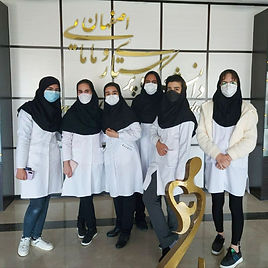
IHSM students are coming from different countries with their own distinct cultures, perspectives, and lifestyles. The main goal of the faculty and administration is to help them get accustomed to the new environment. Sometimes simple information about housing, food, shopping, postal and bank services is essential to keep students well functioning.
IHSM provides the opportunity to live in school dormitories and rent apartments. However, we advise to choose dormitory options for students of the first years of studies. Although modern connection capabilities highly depend on internet, postal and courier services they are still important. Many courier and postal services are available to transfer documental and non-documental goods. Along with the well-established EMS postal service, others like DHL, Express have always been available. IHSM students can receive any postal correspondence and any other messages delivered to the IHSM headquarters, which dispatch them safely to the addressees.



Documents Required for Admission at Isfahan University Of Medical School Iran
-
Applicants must submit the following documents during the admission process:
-
Copy of 10th-grade mark sheet
-
Copy of 12th-grade mark sheet
-
NEET scorecard (latest valid attempt)
-
10 recent passport-size photographs (white background preferred)
-
Official Invitation Letter issued by the university
-
Copy of the student’s international passport (with adequate validity)
-
Copy of Birth Certificate (must be in English or accompanied by a notarized translation)
-
Medical Examination Report, including general health check-up, blood test, chest X-ray, and HIV test (as required by the destination country)
-
Police Clearance Certificate (PCC) (optional but required in many countries)
-
Affidavit of financial support / Bank statement (depending on visa requirements)
-
Document translation, notarization, apostille, or attestation certificates (if required for visa processing)
Hostel And Mess Facilities available at Isfahan University Of Medical School Iran
University has a very good hostel campus with free Wifi access. Accommodations for students are available as singles, doubles and triples. Additionally, there are separate hostels for women and men. All hostels are furnished with beds, chairs, tables, and other necessary items. Facilities within the campus include a supermarket, a clinic, a pharmacy, etc. The hostel is monitored by CCTV 24 hours a day. For Indian students on campus, Mess is also available. All students are subject to strict hostel rules. The hostel also serves Indian food.
Tuition Fees in USD | 1st Year | 2nd Year | 3rd Year | 4th Year | 5th Year | 6th Year |
|---|---|---|---|---|---|---|
Isfahan University Of Medical School Iran Tuition Fees |
Tuition Fees in INR | 1st year | 2nd year | 3rd year | 4th year | 5th year | 6th year |
|---|---|---|---|---|---|---|
Isfahan University Of Medical School Iran Tuition Fees |
MBBS Duration at Isfahan University Of Medical School Iran
The Isfahan University Of Medical School Iran provides a six years course of MBBS including 1 year of internship. The students also get an excellent opportunity to practice at University-affiliated hospitals after getting a 5-year MBBS degree dedicated to theoretical education of medicine.
Benefits of Studying MBBS at Isfahan University Of Medical School Iran
Medical university offer world-class infrastructure, modern facilities, and globally recognized degrees, ensuring students receive a premium education experience similar to or better than leading institutions in India. Most universities use English as the primary language of instruction, making it easier for Indian and international students to adapt, while basic knowledge of the local language remains an added advantage.
The cost of MBBS abroad is significantly lower compared to private medical colleges in India, offering a better return on investment. Students can also practice in the host country after graduation, creating strong earning potential. With more available seats and affordable tuition fees, overseas universities provide a realistic path for thousands of students who miss out on Indian government seats.
Many universities also offer scholarships and financial aid, supporting deserving students and reducing their overall expenses. Additionally, graduates gain access to global career opportunities, enabling them to pursue medical practice or higher studies in various countries once they meet the respective licensing requirements.